
Posts in "Essays"

I Promise…

…the power of covenant.

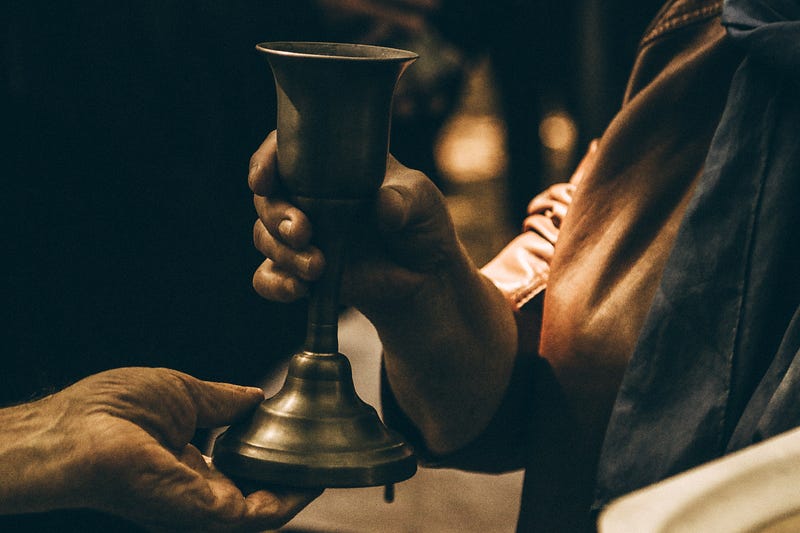
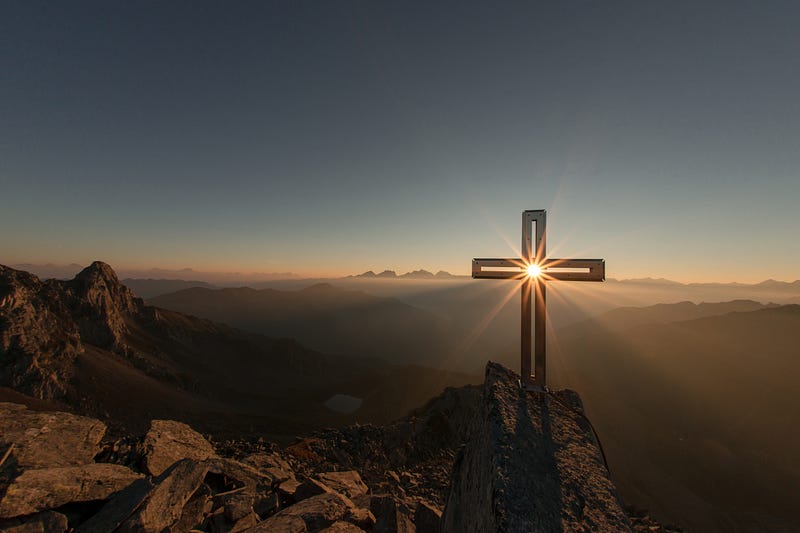
Photo by Alberto Barrera on Unsplash

I am leading our missional community through Micah’s prophecy. It is powerful and challenging. It calls the people of God to righteous action. Not some sort of “social just warrior” kind of action, but an action that is rooted in two things, God’s righteousness and his promises.

We live in an age where promises mean very little.


My country, the United States, is in a constant state of political campaign. Between local, state, and federal office holders politicians of some sort are always campaigning. They make promises, constantly. According to a Rasmussen report in 2014 only 4% of likely voters think that campaigning politicians will keep their promises. That means that an overwhelming majority of people will vote for someone who they don’t think will keep their word.

A bedrock promise that is made over and over in our society is the marital promise. People promise to be committed to one another “till death do us part.” The divorce in the United States is 42–45%. Nearly half of all married people do not keep their promise.


We are cynical people because we have seen promises broken on a regular basis. Promises and oaths do not mean much to people. We simply do not expect them to be kept. If we can’t expect people to keep promises in their most significant of relationships then why would expect any promises to be kept?


Yet, when we open the Scriptures and read the story of the people of God there is this overarching theme of covenant or promise. We can’t escape it.

The closing lines of Micah’s prophecy read,

“Who is a God like you, who pardons sin and forgives the transgression of the remnant of his inheritance? You do not stay angry forever but delight to show mercy. You will again have compassion on us; you will tread our sins underfoot and hurl all our iniquities into the depths of the sea. You will be faithful to Jacob, and show love to Abraham, as you pledged on oath to our ancestors in days long ago.” Micah 7:18–20, NIV

Look at the very last phrase, “as you pledged on oath to our ancestors in days long ago.”

I can’t get over it.

You can’t escape it.

God’s promise, his oath, his word, his covenant, it will stand and he will make good on it.

When you live in an age of skepticism one of the most remarkable things that anyone can do is keep their promise. It might be as simple as arriving on time some place or remembering that you promised to take a friend to the airport. Keeping promises is remarkable when nobody expects anyone to keep their promises.

Then there is this God of the Bible. This God keeps promises over a millennia. The prophets warn of discipline, they warn of exile, they warn of very real consequences to the people of God’s bad behavior. Yet, they also remind that God keeps promises and God will redeem, restore, and renew a remnant, always.

Why?

Because he promised.

The story of Jesus proves that God keeps his promises because death was not victorious over the cross. The resurrection is the culmination of the promise. There is no greater sign than that of God defeating death and raising Jesus from the dead.

The Bible is full of pain, brokenness, and hardship. There is story after story of woe and anguish. There is a sadness that pervades its pages.

There is also a hope. An enduring hope that says, “But God will keep promises.”

When we see this God act out of his righteousness and keep his promises we say like Micah, “Who is a God like you?”

Your Kingdom Come…

…or the need for a new imagination.

Photo by Artem Sapegin on Unsplash

Christians pray the Lord’s Prayer pretty often. Some congregations pray it every Sunday. Many people pray it in their private prayer life. It is safe to say that the Lord’s prayer is central to Christian spirituality.

Yet many of us haven’t take time to even consider what we are praying. We just pray it. The words of the Lord’s Prayer become rote and can become hollow. They are intended to transform us. This prayer is powerful and can change us to our core.

Here is the prayer if you’re unfamiliar with it,

“This, then, is how you should pray: “ ‘Our Father in heaven, hallowed be your name, your kingdom come, your will be done, on earth as it is in heaven. Give us today our daily bread. And forgive us our debts, as we also have forgiven our debtors. And lead us not into temptation, but deliver us from the evil one. ’”
Jesus, in Matthew 6:9–13

I was struck this past weekend by the “your kingdom come, your will be done” bit. I was in a room of folks, who were almost all Christians, and we were talking about the prayer. As we discussed this portion in particular, I asked them to describe what the kingdom of God looks like? What would it mean for this prayer to become reality?

We stumbled around for a bit. There was little vision for what it meant to pray, “your kingdom come.”

As we talked more, it began to dawn on me that we needed to develop a kingdom imagination. So much of our Christian faith is tied to our minds and to our imaginations.

Paul says in his letter to the Romans, “Do not conform to the pattern of this world, but be transformed by the renewing of your mind. Then you will be able to test and approve what God’s will is — his good, pleasing and perfect will. (Romans 12:2)”

Why does he link the renewing of our mind to transformation and non-conformance?

I think it is because when our minds are renewed we have the ability to imagine the kingdom of God in fresh new ways. We can begin to see what this world could look like if God’s kingdom broke into time and space. When our minds are renewed we can see the world as it should be.

There is a saying in the leadership world, “Begin with the end in mind.” When we do this it is easier to figure out our plan. If we know where we are going there is a better chance that we can make it to the destination. When we pray, “your kingdom come,” we are praying with the end in mind. We are praying, “This is the world as it should be. God, help me partner with you as you bring that world to reality.”

If we can’t imagine what that world would look like, then praying, “your kingdom come” is meaningless. It’s empty words.

So what does this kingdom look like? How are our imaginations to be renewed? What is the end goal?

I think we begin in the “Beatitudes” from Matthew 5.

Blessed are the poor in spirit, for theirs is the kingdom of heaven. 
Blessed are those who mourn, for they will be comforted. 
Blessed are the meek, for they will inherit the earth. 
Blessed are those who hunger and thirst for righteousness, for they will be filled. 
Blessed are the merciful, for they will be shown mercy. 
Blessed are the pure in heart, for they will see God. 
Blessed are the peacemakers, for they will be called children of God. 
Blessed are those who are persecuted because of righteousness, for theirs is the kingdom of heaven. 
Blessed are you when people insult you, persecute you and falsely say all kinds of evil against you because of me. Rejoice and be glad, because great is your reward in heaven, for in the same way they persecuted the prophets who were before you. Matthew 5:3–12

This is the world as it should be. When we can start imagining a world like this, we can begin to imagine what it means when we pray, “your kingdom come.”

If we know where we are going, perhaps we can get there.

Holy Be Your Name

…or taking time to acknowledge God

Photo by Thomas Griesbeck on Unsplash

Over the last week I have been doing something new in my spiritual practice, not asking God for anything. I have simply been taking time to acknowledge God.

It is ridiculously hard.

No, I am serious. I have never done anything this hard in prayer in my life. Spending time in prayer simply acknowledging who God is has been beyond difficult. You would think that someone who has been actively seeking to follow God since 1995 and is a “professional Christian” would be able to spend hours and hours simply acknowledging God.

Nope. I can’t.

Monday it was about 5 minutes before my mind and heart wandered to other things and people and concerns.

Tuesday it was about 2.

Wednesday, I didn’t even take time to do it because, “What’s the point?” Yes, I’m firmly Gen X.

Thursday, I figured I better make a bit more effort and was successfully able to focus on God and God alone for all of about 7 minutes! Victory! Or not.

This morning, 10 minutes, and in some sense I felt like I had just finished an hour working. Not a cardio kind of work out, but lifting weight with someone who was pushing me. I felt empty and completely filled up all at the same time.

Ten minutes.

That is the best I’ve got right now. Ten minutes.

I have been wrestling with why all week. I have been trying to hear from the Holy Spirit and what word of grace and truth was being spoken to me. I am looking to grab on to a kairos moment. A moment where God breaks in and enters my time and space. Kairos moments drive us to repent and believe. They keep us from getting stuck and propel us to grow.

Here is what I have discovered, I’m self-centered. Completely, utterly, and totally self-centered. In my relationship with God I am totally focused on me. If God were a human being he would walk away from this relationship. Nobody likes being friends with self-centered, me only, people. When it comes to God I am a taker and struggle to give.

You might be thinking, “But you’re a pastor. You’ve given your whole life to God, right?”

I may have given my best hours to serve God, but I am coming to realize that I have not even come close to giving him my life.

I take from God.

I take his grace.

I take his mercy.

I take his ear for my prayer.

I take…

I take…

I take…

Just seeing those things listed out and seeing the repeated “I” makes me sick.

Jesus said,

“This, then, is how you should pray: “ ‘Our Father in heaven, hallowed be your name,” (Matthew 6:9)

This call to begin our prayer this way challenges us. It demands us to not be self-centered. We start by giving. We begin by giving to God. When we pray we are to start with God in mind.

How do I go forward? Continuing to practice an acknowledgement of God and try to become a giver in relation to him.

Jesus is Not A Sales Pitch

…or all of life is sacred.

Photo by rawpixel.com on Unsplash

Last night I spoke at an event called, “The Merge: Where faith, culture, and art meets.” For just a few minutes I spoke about the reality that all of life for the person of faith is sacred. This was in the context of being a person of faith in the public forum.

As the conversation after the talk developed it ceased to be a discussion about living life as a sacred whole and became a discussion about how Christians have conversations with non-Christians. It almost felt like a sales seminar. I have been thinking about this response to the talk (and my attempted questions after) trying to discern why this is what happened.

I think it is because people of faith in America, particularly evangelicals, have lost their sense of identity. We struggle to understand that living as a Christ-follower is to live this way,

“And whatever you do, whether in word or deed, do it all in the name of the Lord Jesus, giving thanks to God the Father through him.” Colossians 3:17

We have come to believe that to “do it all in the name of the Lord Jesus” means that we must include some sort of gospel speech. But that’s not it. It is first to understand that all of life is sacred. All of life, every aspect of life is sacred space and time. Working, playing, sleeping, studying, it is all sacred.

Second, we must come to grips with the fact that being a person of faith in the public forum is to be one who lives the gospel. This means we live truth, grace, mercy, love, and faith. Jesus said,

“In the same way, let your light shine before others, that they may see your good deeds and glorify your Father in heaven.” Matthew 5:16

One of the people in the room challenged the direction of the conversation last night. He said, “You say you don’t want this to be a sales pitch. But, you all are talking like it is a sales pitch and trying to figure out how sell people. If it really means so much to you, you don’t need to do that.”

He was right.

That’s it isn’t it? Is following Jesus who I am (who you are) or is it something that you put on? If it is who I am then I can go be a great architect or doctor or student or salesman. If it is who I am then my faith, my identity, will become clear to those around me. I don’t have to pitch Jesus. In the same way that I don’t have explain to everyone how much I love my wife or my kids, my love for Jesus needs to be demonstrated in my life.

When our love for Jesus is not demonstrated in our lives, that’s when we have to pull out the sales pitch.

Don’t Be Crusty

…how to get out of your spiritual rut.

Photo by Amador Loureiro on Unsplash

Part of being on mission with God is our continued growth as a follower of Jesus. It is realizing that we have not arrived nor will we fully arrive with God. As we are on mission with him we must continually hear from him, change, and draw ever closer to him. How do we do it?


When you first start following Jesus it seems like everything is exciting and new. Your spiritual life feels fresh and real. The Bible “comes alive.” You’re reading it and praying. You and God feel super close. It is almost like you can audibly hear his voice.

Then something happens. Those books in the Bible like Ephesians and Philippians feel stale. You try to read some Old Testament and it’s just confusing and hard. So you read a Gospel and it seems really long. All of a sudden your prayers feel like they are bouncing off the ceiling. You start going through the motions of church attendance and maybe a Bible study here or there. You take Instagram pictures of your open Bible next to a steaming cup of joe, that was made from locally roasted beans, but you don’t really read it.

You’re in a rut. You’re stuck in a moment that you can’t get out of (you even tried listening to U2 and it didn’t help).

How do you break out of it?


First, we need to understand that our spiritual growth was never intended to be a “me and Jesus” kind of thing. It was always intended to be an “us and Jesus” kind of thing.

With this in mind, I want to challenge you to enter more fully into the community of believers. For us to break out of a spiritual rut we need other people. When we study the Scriptures it is best done in the company of other believers. We gather around the Scripture and pray and talk and challenge one another.

Second, we need to realize that our spiritual growth is wrapped up in stuff that is everywhere. It’s wrapped up in the small, every day, seemingly meaningless kinds of things. As one ancient writer said, “Do not despise the day of small things.”

We need to slow down and catch on to the things that God is doing in our midst. When we are at a stop light and we catch some beauty or a thought pops into our mind, will we hold on to it or will we ignore it? It is in these moments that we experience kairos moments. A kairos moment is the in-breaking of God into our lives. Too often we ignore it and move on.

Third, the Bible is not Jesus. The Bible is not God. We do not have a relationship with the Bible, we have a relationship with God. While we believe the Bible to be the very word of God and that it is authoritative, we must understand that the Bible reveals God to us but it is not the end all in our relationship with God.

Along with the Scriptures we need an abiding prayer life. If we are all study and no prayer, then our spiritual life will grow cold. Prayer brings us into the spiritual presence of God. It is in prayer that we are changed deeply. Spending time in prayer transforms regular space into sacred space.

Community is the oxygen, the Scriptures are the fuel, and prayer is the match that lights a blazing fire in our soul.