Posts in "Photos"

Finding My Religion

Could religion actually be good?

Photo of dirty hands clasped in prayer by Nathan Dumlao on Unsplash

When you think of religion what comes into your mind?

For many of us it's probably something like, “man's pursuit of the divine,” or “a system of beliefs,” or “the crutch of humanity,” or “the worst thing that's ever happened to humanity.” Whatever our understanding or definition it's typically tinged with a bit of negativity.

How many folks do you know say something like, “I'm spiritual not religious”? In many of my circles that saying goes like this, “Christianity is a relationship not a religion.”

Religion is apparently not a very popular thing.

“Whatever you do, don't talk about religion or politics.” – Someone

“Imagine there's no countries It isn't hard to do Nothing to kill or die for And no religion, too” – John Lennon

Religion is a dirty word. When you talk to most folks it seems like religion conjures up images of disconnection, judgementalism, factionalism, and maybe even hate. I saw a funny meme that said, “Religion is just weird guys in robes making stuff up.”

I think it is safe to say that we do not think, by and large, very highly of religion.

Is there anything redeeming or good or helpful about religion?

Does religion deserve its bad reputation?

Is it possible that religion might not be the evil villain that it has been made out to be?

I think it was in a Rob Bell podcast (and he probably got it from Richard Rohr) that I heard something that jarred me and I may have heard an audible record scratch in my mind.

He was talking about religion and in particular he was hitting on the Latin root of the word. Both religion and ligament share the Latin root, “ligare”. “Ligare” means to bind or bond. “Religare” is the Latin term from which we derive “religion.” If my research into the Latin pre-fix “re-” is correct then the idea of “religare” is “bind again and again.”

It's interesting to me that the word that developed into our modern word for “religion” is one that in so many ways is the opposite of what it means today.

What if religion is really about “binding again and again”?

As I think about the idea of religion in conjunction to its linguistic roots it is exactly the kind of thing that I want to be about.

What I like about thinking about the term, religion, at this deeper level is that I find it to be deeply connected to the best aspect (in my not so humble opinion) of the human experience: forgiveness.

There is an assumption with the very core of the word that there is going to be disconnection and brokenness and separation but there is also the hope of connection and healing and unity. But, not only that those are realities but also the reality that they would be an ongoing process. There is in the Latin prefix “re-” a sense of again and again.

Religion in this sense is such an honest word. It doesn't try to sugar coat our experience. It doesn't pretend that there is in some way an end to the need for re-connecting. All of us know that life and relationships of every kind are messy and hard.

The deeper we go in relationship the more we will find our need to pursue love and forgiveness.

There is only so long that we can pretend in relationships. At some point our masks come off and we finally get real (yes, yes, that sounds an awful lot like the opening to MTV's Real World, I'm a product of my culture). When this happens we will inevitably hurt the person with whom we are in relationship with and they will inevitably hurt us.

My wife and I just celebrated our 26th wedding anniversary. There is no person that knows me like her and I assume that I know her better than any other. We have known one another since 1995. In the nearly 30 years that we have had a relationship we have hurt one another. Some hurts were deeper than others. But, they were hurts nonetheless. Each time we have chosen to forgive and pursue love. In so doing, we were practicing the most foundational form of religion.

I am coming to the conclusion that instead of running away from religion as I follow Jesus, I'm running head long into religion. Religion is the core of what I want to be all about because it seems to be what Jesus was all about.

One time Jesus was asked what the most important commandment was. He responded with love God and the second being love your neighbor as yourself. Later, Jesus would expand on the love your neighbor bit to also include loving your enemies.

Jesus was all about religion. He was all about re-connecting again and again those things or people that had been broken apart.

Whether someone is a Christian or a church-goer or even an atheist I think we all might want consider religion.

You see, I don't need to imagine a world without religion. We see that world every single day. Everywhere we look it seems that we can easily find broken relationships and disconnection.

It's harder to imagine a world with religion. A world that was rife with connection and forgiveness rooted in love.

As I continue to think about this it strikes me that there is not any particular belief necessary for religion. What matters is for people to love well. Can a person who believes in God do that? Yes. Can a person who does not believe in God do that? Yes.

I am committed to following Jesus. I think by following in his way it becomes easier to love well to practice religion (but that's for another post).

It turns out that as I have tried to run from “religion” to a “relationship with God” or a deeper “spirituality,” I'm actually finding my religion.

Everyday I wake up with one thing on my mind, “How can I love well today?”

In other words, “I can't wait to practice religion today!”

Finding My Religion

Could religion actually be good?

Photo of dirty hands clasped in prayer by Nathan Dumlao on Unsplash

When you think of religion what comes into your mind?

For many of us it's probably something like, “man's pursuit of the divine,” or “a system of beliefs,” or “the crutch of humanity,” or “the worst thing that's ever happened to humanity.” Whatever our understanding or definition it's typically tinged with a bit of negativity.

How many folks do you know say something like, “I'm spiritual not religious”? In many of my circles that saying goes like this, “Christianity is a relationship not a religion.”

Religion is apparently not a very popular thing.

“Whatever you do, don't talk about religion or politics.” – Someone

“Imagine there's no countries It isn't hard to do Nothing to kill or die for And no religion, too” – John Lennon

Religion is a dirty word. When you talk to most folks it seems like religion conjures up images of disconnection, judgementalism, factionalism, and maybe even hate. I saw a funny meme that said, “Religion is just weird guys in robes making stuff up.”

I think it is safe to say that we do not think, by and large, very highly of religion.

Is there anything redeeming or good or helpful about religion?

Does religion deserve its bad reputation?

Is it possible that religion might not be the evil villain that it has been made out to be?

I think it was in a Rob Bell podcast (and he probably got it from Richard Rohr) that I heard something that jarred me and I may have heard an audible record scratch in my mind.

He was talking about religion and in particular he was hitting on the Latin root of the word. Both religion and ligament share the Latin root, “ligare”. “Ligare” means to bind or bond. “Religare” is the Latin term from which we derive “religion.” If my research into the Latin pre-fix “re-” is correct then the idea of “religare” is “bind again and again.”

It's interesting to me that the word that developed into our modern word for “religion” is one that in so many ways is the opposite of what it means today.

What if religion is really about “binding again and again”?

As I think about the idea of religion in conjunction to its linguistic roots it is exactly the kind of thing that I want to be about.

What I like about thinking about the term, religion, at this deeper level is that I find it to be deeply connected to the best aspect (in my not so humble opinion) of the human experience: forgiveness.

There is an assumption with the very core of the word that there is going to be disconnection and brokenness and separation but there is also the hope of connection and healing and unity. But, not only that those are realities but also the reality that they would be an ongoing process. There is in the Latin prefix “re-” a sense of again and again.

Religion in this sense is such an honest word. It doesn't try to sugar coat our experience. It doesn't pretend that there is in some way an end to the need for re-connecting. All of us know that life and relationships of every kind are messy and hard.

The deeper we go in relationship the more we will find our need to pursue love and forgiveness.

There is only so long that we can pretend in relationships. At some point our masks come off and we finally get real (yes, yes, that sounds an awful lot like the opening to MTV's Real World, I'm a product of my culture). When this happens we will inevitably hurt the person with whom we are in relationship with and they will inevitably hurt us.

My wife and I just celebrated our 26th wedding anniversary. There is no person that knows me like her and I assume that I know her better than any other. We have known one another since 1995. In the nearly 30 years that we have had a relationship we have hurt one another. Some hurts were deeper than others. But, they were hurts nonetheless. Each time we have chosen to forgive and pursue love. In so doing, we were practicing the most foundational form of religion.

I am coming to the conclusion that instead of running away from religion as I follow Jesus, I'm running head long into religion. Religion is the core of what I want to be all about because it seems to be what Jesus was all about.

One time Jesus was asked what the most important commandment was. He responded with love God and the second being love your neighbor as yourself. Later, Jesus would expand on the love your neighbor bit to also include loving your enemies.

Jesus was all about religion. He was all about re-connecting again and again those things or people that had been broken apart.

Whether someone is a Christian or a church-goer or even an atheist I think we all might want consider religion.

You see, I don't need to imagine a world without religion. We see that world every single day. Everywhere we look it seems that we can easily find broken relationships and disconnection.

It's harder to imagine a world with religion. A world that was rife with connection and forgiveness rooted in love.

As I continue to think about this it strikes me that there is not any particular belief necessary for religion. What matters is for people to love well. Can a person who believes in God do that? Yes. Can a person who does not believe in God do that? Yes.

I am committed to following Jesus. I think by following in his way it becomes easier to love well to practice religion (but that's for another post).

It turns out that as I have tried to run from “religion” to a “relationship with God” or a deeper “spirituality,” I'm actually finding my religion.

Everyday I wake up with one thing on my mind, “How can I love well today?”

In other words, “I can't wait to practice religion today!”

The Thing Called Deconstruction

What if deconstruction was something else?

Everywhere you look people are deconstructing. For some, this looks like a total rejection of faith. Some question a doctrine here or there. Others walk away from “church” and hold on to Jesus. Loads of “Christian famous” folks are carrying out their deconstruction online for the world to see. Some are leveraging deconstruction for financial gain (yes, you can hire people to coach you through a season of deconstruction).

Then there's the response to deconstruction. Some celebrate it and almost evangelize it to others. Others point to it as a simply a way to disguise apostasy. Both seem to be missing the mark.

The Dark Night of the Soul

What we now call “deconstruction” is nothing new.

St. John of the Cross is largely credited with coining the term, “dark night of the soul” in his 16th century poem.

Even before him, the concept is present throughout the writings of early Christians. The dark night of the soul often refers to seasons where the one who believes encounters in fresh ways the mysteries of the divine. This could be in good times and bad times.

As we look to the story of the people of God in the Bible we see this dark night of the soul or deconstruction all over the place. In particular, I think of the books of Ecclesiastes, Lamentations and Jeremiah (honestly, almost all of the prophets show signs of this). One of my favorite parts of the Acts of the Apostles is witnessing the deconstruction of Peter and Paul's faith.

What strikes me is that counter to what some folks would have us think, deconstruction is normal for people seeking to follow in the way of Christ.

Maybe what it is...

I have been thinking a lot about this dark-night-of-the-soul/deconstruction for the last number of years. Something I am realizing is that I have gone through many seasons of deconstruction. So much so, that I'm not sure that the term is even helpful. For a while I thought maybe it was a cycle of deconstruction and reconstruction. But, I'm not sure that's really it. I think that perhaps, something else is going on.

I wonder if a little phrase from C.S. Lewis' The Last Battle might be helpful,

“It is as hard to explain how this sunlit land was different from the old Narnia as it would be to tell you how the fruits of that country taste. Perhaps you will get some idea of it if you think like this.You may have been in a room in which there was a window that looked out on a lovely bay of the sea or a green valley that wound away among mountains. And in the wall of that room opposite to the window there may have been a looking-glass. And as you turned away from the window you suddenly caught sight of that sea or that valley, all over again, in the looking-glass. And the sea in the mirror, or the valley in the mirror, were in one sense just the same as the real ones: yet at the same time they were somehow different–deeper, more wonderful, more like places in a story: in a story you have never heard but very much want to know. The difference between the old Narnia was like that. The new one was a deeper country: every rock and flower and blade of grass looked as if it meant more. I can’t describe it any better than that: if you ever get there you will know what I mean.

It was the Unicorn who summed up what everyone was feeling. He stamped his right forehoof on the ground and neighed, and then cried:

“I have come home at last! This is my real country! I belong here. This is the land I have been looking for all my life, though I never knew it till now. The reason why we loved the old Narnia is that it sometimes looked a little like this. Bree-hee-hee! Come further up, come further in!”

“Further up, and further in.” It strikes me that this is really what is happening in my life and the life of so many others. Maybe, it's not de- and re- construction? Could it be that it's a vast spiral of becoming more and more of who we are meant to be? Ken Wilber in his text, A Theory of Everything, calls this the process of “transcend and include.”

What if we could envision our lives progressing not along a linear line of ups and downs, but as a spiral that is driving us deeper and deeper towards reality. We learn what we need to learn where we are right here, and right now. Then that drives us ever deeper to new truths and a clearer sense of who we are and who we are to become. The mystery continues to beckon, “further up, and further in...”

I don't have a new word for this, but maybe an old word would do? Maybe the old word, “sanctification,” is a better term. This process of becoming something new. When I read through the stories of God's people I see them constantly moving and growing and changing.

“Further up, and further in...”

It's not so much a deconstruction or even a dark night of the soul as much as it is being confronted with a current reality and the hope of something new before us. This something new is a version of ourselves moving towards greater flourishing.

What if...

I wonder if this sanctification is what Jesus meant when he talked about how he had come to give us life and life to the full?

What if, all the stories that are emerging of deconstruction are really stories of sanctification. Most of the time, from what I see, when people come out from the other side of this season they are more loving, more gracious, more given to mercy, and have a greater empathy.

What if, we need to follow the footsteps of the prophets and of the apostles and have all our assumptions about God challenged and broken, to truly find God in the deep mystery?

Have you experienced a dark night of the soul? Or have you experienced deconstruction? How have you changed? In what ways does your life look different as a result?

The Thing Called Deconstruction

What if deconstruction was something else?

Everywhere you look people are deconstructing. For some, this looks like a total rejection of faith. Some question a doctrine here or there. Others walk away from “church” and hold on to Jesus. Loads of “Christian famous” folks are carrying out their deconstruction online for the world to see. Some are leveraging deconstruction for financial gain (yes, you can hire people to coach you through a season of deconstruction).

Then there's the response to deconstruction. Some celebrate it and almost evangelize it to others. Others point to it as a simply a way to disguise apostasy. Both seem to be missing the mark.

The Dark Night of the Soul

What we now call “deconstruction” is nothing new.

St. John of the Cross is largely credited with coining the term, “dark night of the soul” in his 16th century poem.

Even before him, the concept is present throughout the writings of early Christians. The dark night of the soul often refers to seasons where the one who believes encounters in fresh ways the mysteries of the divine. This could be in good times and bad times.

As we look to the story of the people of God in the Bible we see this dark night of the soul or deconstruction all over the place. In particular, I think of the books of Ecclesiastes, Lamentations and Jeremiah (honestly, almost all of the prophets show signs of this). One of my favorite parts of the Acts of the Apostles is witnessing the deconstruction of Peter and Paul's faith.

What strikes me is that counter to what some folks would have us think, deconstruction is normal for people seeking to follow in the way of Christ.

Maybe what it is...

I have been thinking a lot about this dark-night-of-the-soul/deconstruction for the last number of years. Something I am realizing is that I have gone through many seasons of deconstruction. So much so, that I'm not sure that the term is even helpful. For a while I thought maybe it was a cycle of deconstruction and reconstruction. But, I'm not sure that's really it. I think that perhaps, something else is going on.

I wonder if a little phrase from C.S. Lewis' The Last Battle might be helpful,

“It is as hard to explain how this sunlit land was different from the old Narnia as it would be to tell you how the fruits of that country taste. Perhaps you will get some idea of it if you think like this.You may have been in a room in which there was a window that looked out on a lovely bay of the sea or a green valley that wound away among mountains. And in the wall of that room opposite to the window there may have been a looking-glass. And as you turned away from the window you suddenly caught sight of that sea or that valley, all over again, in the looking-glass. And the sea in the mirror, or the valley in the mirror, were in one sense just the same as the real ones: yet at the same time they were somehow different–deeper, more wonderful, more like places in a story: in a story you have never heard but very much want to know. The difference between the old Narnia was like that. The new one was a deeper country: every rock and flower and blade of grass looked as if it meant more. I can’t describe it any better than that: if you ever get there you will know what I mean.

It was the Unicorn who summed up what everyone was feeling. He stamped his right forehoof on the ground and neighed, and then cried:

“I have come home at last! This is my real country! I belong here. This is the land I have been looking for all my life, though I never knew it till now. The reason why we loved the old Narnia is that it sometimes looked a little like this. Bree-hee-hee! Come further up, come further in!”

“Further up, and further in.” It strikes me that this is really what is happening in my life and the life of so many others. Maybe, it's not de- and re- construction? Could it be that it's a vast spiral of becoming more and more of who we are meant to be? Ken Wilber in his text, A Theory of Everything, calls this the process of “transcend and include.”

What if we could envision our lives progressing not along a linear line of ups and downs, but as a spiral that is driving us deeper and deeper towards reality. We learn what we need to learn where we are right here, and right now. Then that drives us ever deeper to new truths and a clearer sense of who we are and who we are to become. The mystery continues to beckon, “further up, and further in...”

I don't have a new word for this, but maybe an old word would do? Maybe the old word, “sanctification,” is a better term. This process of becoming something new. When I read through the stories of God's people I see them constantly moving and growing and changing.

“Further up, and further in...”

It's not so much a deconstruction or even a dark night of the soul as much as it is being confronted with a current reality and the hope of something new before us. This something new is a version of ourselves moving towards greater flourishing.

What if...

I wonder if this sanctification is what Jesus meant when he talked about how he had come to give us life and life to the full?

What if, all the stories that are emerging of deconstruction are really stories of sanctification. Most of the time, from what I see, when people come out from the other side of this season they are more loving, more gracious, more given to mercy, and have a greater empathy.

What if, we need to follow the footsteps of the prophets and of the apostles and have all our assumptions about God challenged and broken, to truly find God in the deep mystery?

Have you experienced a dark night of the soul? Or have you experienced deconstruction? How have you changed? In what ways does your life look different as a result?

When Certainty Died

My certainty died but then my faith lived

I was there when he died.

I sat next to him as they turned off all the machines. His wife and daughters had left the hospital and entrusted these moments to me and another friend.

It didn’t take long.

He was ready.


I had met him shortly after we moved into the neighborhood. He had a loud laugh and a sly sense of humor. I had never met anyone quite like him. He was both the life of the party and a loner. Each winter he drove around picking up the neighborhood kids so they didn’t freeze at the bus stop.

His laugh was unmistakable.

During the time we knew one another he taught me about being someone who thought of others before himself.

I taught him about Jesus.

I guess in reality, he taught me about Jesus.


After he died, I didn’t really know what to do. I had done the pastor thing when other people died.

But, this was different.

Our faith community had prayed and prayed. We visited. We cared. We never stopped showing up.

I had taken him to dialysis.

We had good and deep conversations about God, faith, and love.

If anyone should have been healed it was him. Yet, he didn’t get healed. A tiny leak in his bowel, indiscernible until the very end, killed him from the inside out.

I was confused. I was heartbroken. I was angry.


It was there sitting next to my friend when he died that my certainty died too.

As I sit here today years later, I realize that something else was born that day: my faith.

Up until that point my belief was an intellectual certainty. Sure, I wrestled with various theological and doctrinal ideas but these were simply intellectual machinations. They didn’t really mean much. Theology, doctrine, and dogma was an intellectual game. I was constantly testing it and stretching it to figure out what was the most intellectually appealing position. It was fun and life-giving.

Wherever I found myself on any particular day I was certain.

This certainty was something very precious to me. I held on to belief with an iron fist. I protected my certainty like Frodo protected the Ring.

I could tell you affirmatively all the things that I believed and I could argue for them. Likely, I could convince you that I was right.


The day that my certainty died was the day that faith was born.

You see, certainty requires no faith. It simply needs some intellectual ascent and a bit of reasonable evidence and certainty can be attained.

But, faith comes from the mistiness of doubt. Faith is the small light shining in the misty darkness of spiritual pursuit. We stumble and grope and discover bits here and there.

When certainty dies, we can finally find faith.

Faith is hope in the midst of doubt. Doubt is not the adversary of faith. No, it turns out that doubt is the harbinger of faith.

Certainty, is the great adversary.

When we are certain, we don’t have to have faith.

For instance, I don’t have faith that I ate a ham and pepper omelette for breakfast this morning. I know it. I am certain of it.

I have faith that God loves me and cares for me in the midst of all the goods and bads of this world. Why? Because I’ve experienced things in my life that don’t make sense apart from something outside myself. I am confident that Jesus is who the Gospels writers say he is. I am confident that he did what the Gospel writers say he did. This confidence in the self-sacrificing-loving Christ provides me with grounds for faith.


When certainty died, faith came to life.

With certainty dead, I could finally explore all the things of God. What a journey it is! There’s no longer any need for us/them, in/out, there’s only a need for loving well.

Living with faith is freedom because I no longer have to protect my certainty. I can stare into the mist and ask the questions and re-imagine faith and grasp for hope.


I was there when he died.

I was there when he began to truly live and so did I.

When Certainty Died

My certainty died but then my faith lived

I was there when he died.

I sat next to him as they turned off all the machines. His wife and daughters had left the hospital and entrusted these moments to me and another friend.

It didn’t take long.

He was ready.


I had met him shortly after we moved into the neighborhood. He had a loud laugh and a sly sense of humor. I had never met anyone quite like him. He was both the life of the party and a loner. Each winter he drove around picking up the neighborhood kids so they didn’t freeze at the bus stop.

His laugh was unmistakable.

During the time we knew one another he taught me about being someone who thought of others before himself.

I taught him about Jesus.

I guess in reality, he taught me about Jesus.


After he died, I didn’t really know what to do. I had done the pastor thing when other people died.

But, this was different.

Our faith community had prayed and prayed. We visited. We cared. We never stopped showing up.

I had taken him to dialysis.

We had good and deep conversations about God, faith, and love.

If anyone should have been healed it was him. Yet, he didn’t get healed. A tiny leak in his bowel, indiscernible until the very end, killed him from the inside out.

I was confused. I was heartbroken. I was angry.


It was there sitting next to my friend when he died that my certainty died too.

As I sit here today years later, I realize that something else was born that day: my faith.

Up until that point my belief was an intellectual certainty. Sure, I wrestled with various theological and doctrinal ideas but these were simply intellectual machinations. They didn’t really mean much. Theology, doctrine, and dogma was an intellectual game. I was constantly testing it and stretching it to figure out what was the most intellectually appealing position. It was fun and life-giving.

Wherever I found myself on any particular day I was certain.

This certainty was something very precious to me. I held on to belief with an iron fist. I protected my certainty like Frodo protected the Ring.

I could tell you affirmatively all the things that I believed and I could argue for them. Likely, I could convince you that I was right.


The day that my certainty died was the day that faith was born.

You see, certainty requires no faith. It simply needs some intellectual ascent and a bit of reasonable evidence and certainty can be attained.

But, faith comes from the mistiness of doubt. Faith is the small light shining in the misty darkness of spiritual pursuit. We stumble and grope and discover bits here and there.

When certainty dies, we can finally find faith.

Faith is hope in the midst of doubt. Doubt is not the adversary of faith. No, it turns out that doubt is the harbinger of faith.

Certainty, is the great adversary.

When we are certain, we don’t have to have faith.

For instance, I don’t have faith that I ate a ham and pepper omelette for breakfast this morning. I know it. I am certain of it.

I have faith that God loves me and cares for me in the midst of all the goods and bads of this world. Why? Because I’ve experienced things in my life that don’t make sense apart from something outside myself. I am confident that Jesus is who the Gospels writers say he is. I am confident that he did what the Gospel writers say he did. This confidence in the self-sacrificing-loving Christ provides me with grounds for faith.


When certainty died, faith came to life.

With certainty dead, I could finally explore all the things of God. What a journey it is! There’s no longer any need for us/them, in/out, there’s only a need for loving well.

Living with faith is freedom because I no longer have to protect my certainty. I can stare into the mist and ask the questions and re-imagine faith and grasp for hope.


I was there when he died.

I was there when he began to truly live and so did I.

Free to Live

freedom There is this interesting little line in the letter that Paul of Tarsus wrote to the faith community in Galatia.

“Christ has set us free to live a free life. So take your stand! Never >again let anyone put a harness of slavery on you.” – Galatians 5:1, The >Message

What does it mean that we are set free to live a free life?

Our freedom is rooted in grace. When are all bound up in shame we can't live well. There is a constant fear and a constant sense of existential dread. Everything we do is under this weight of shame. Shame presses us into hiding from being exposed. We believe that we are the sin-sickness that entangles us.

Grace comes in and says, “No! You're free! You are healed from that sin-sickness, your true self is now free to live life to the full! No more hiding! No more worry! You're whole and free and embraced by the Divine! Go now and live!”

Jesus said, “I have come that they might have life and have it to the full! (John 10:10)”

Grace frees to live that life.

In another letter that Paul wrote he wrote this, “Now God has us where he wants us, with all the time in this world and the next to shower grace and kindness upon us in Christ Jesus. Saving is all his idea, and all his work. All we do is trust him enough to let him do it. It’s God’s gift from start to finish! We don’t play the major role. If we did, we’d probably go around bragging that we’d done the whole thing! No, we neither make nor save ourselves. God does both the making and saving. He creates each of us by Christ Jesus to join him in the work he does, the good work he has gotten ready for us to do, work we had better be doing. (Ephesians 2:7-10, The Message)”

Isn't that amazing? We are not simply freed by grace but we are called by grace to join Jesus in work that he has “gotten ready for to do.”

When grace breaks into our lives it transforms everything. All of a sudden we are no longer burdened about this or that. We no longer find ourselves all bound up in shame. What do we find? We find our sense of purpose, a sense of being, a sense of calling!

One of my favorite movies is The Mighty Ducks. It tells the story of Gordon Bombay a fallen hockey star who has lost his way. He ends up having to coach a hockey team of benchwarmers. In the midst of his coaching his shame is removed as experiences grace after grace. What does he discover? He discovers that this thing that was at first a punishment, becomes his calling. He's a coach and he's really good at it. In his coaching he experiences love and joy and fulfillment.

This is the very thing that grace does. Grace sets us free to find love, joy, and fulfillment.

Christ has set us free indeed!

Grace or Karma?

“Karma is a bitch.”

Did that get your attention? 😏

I am sure it did. Pastors are not supposed to use that kind of bad language.

This little sentence is something that we hear often in our world isn’t it? It points to this sense that “what we put out into the universe will return to us.” If we do bad things, then we get bad things in return, so the thinking goes.

Karma can be useful as an answer to the age old question, “Why do bad things happen to good people?” Well, you did bad things in a previous life and those bad choices are being visited on you in this life, so the thinking goes.

Karma can also challenge us to do better. If we believe that any bad action will ultimately be returned to us in some way, we will likely try to choose the better.

In a nutshell, karma argues that every action has consequences.

That resonates, does it not?

We like the idea that when a bad person does a bad thing that they will face consequences of their bad action. But, what do we do when we are that bad person? Most of us don’t really think we are bad. We are able to see how those people have bad karma, we don’t really see how we deserve it.

I think this is something that I love about grace. It breaks us out of the karma cycle.

A real and true grace is not cheap. A real and true grace has two key components. First, it acknowledges the bad. Grace is not naïve. As Dietrich Bonhoeffer writes in his seminal book, The Cost of Discipleship,

“Cheap grace is the grace we bestow on ourselves. Cheap grace is the preaching of forgiveness without requiring repentance, baptism without church discipline, Communion without confession…Cheap grace is grace without discipleship, grace without the cross, grace without Jesus Christ, living and incarnate.”

Grace needs a cross. What wrong has been done must be dealt with. If you offer a cheap grace it is not truly grace, it is simply looking the other way. Cheap grace, a cross-less grace, is nothing more than ignoring one’s bad actions for the sake of avoiding conflict. Grace necessarily engages conflict because it refuses to ignore brokenness.

Second, a real and true grace deals with the bad. What do I mean by this? I mean that a grace that simply acknowledges the bad but doesn’t actually deal with the consequences of that bad is no grace. This is often why we find so many public acts of confession to be hollow. Their words are nice, but we see no resulting action that supports the words. Grace is costly precisely because it demands a cross. It demands for justice to be restored.

At the core of our bad actions we ultimately become purveyors of injustice.

When we hurt another in word or deed we are practicing injustice by demeaning the image of God in them. Too often there is a doubling down by not redressing the issue. Then finally, we try to pretend as though we were maintaining our moral uprightness.

Grace seeks to set this right.

Unllike karma that is ultimately retributive in nature, grace goes a different way.

What we see God do through Christ is to deal with the bad at its most fundamental level. For justice to be restored the bad ultimately has to be dealt with. At the deepest level, injustice is an affront to God. What we see throughout the Scriptures is that separation from the divine presence is the ultimate consequence for the bad. In the cross, we see God through God’s own self-sacrifice meet the requirements of separation but then overcomes it in resurrection.

The cross and the resurrection of Christ not only restores justice at the most fundamental level but also opens the door for all of creation to be redeemed, restored, and reconciled.

This costly grace frees us from the consequences of our bad actions and intentions.

But more than this, it frees us to live as agents of the very same reconciliation!

Grace is amazing because it frees us. We no longer look over our shoulder. There is a freeing to follow in the self-sacrficial-loving way of Jesus.

Grace drives us beyond our ego and self-concern. Karma locks us into primarily worrying about self.

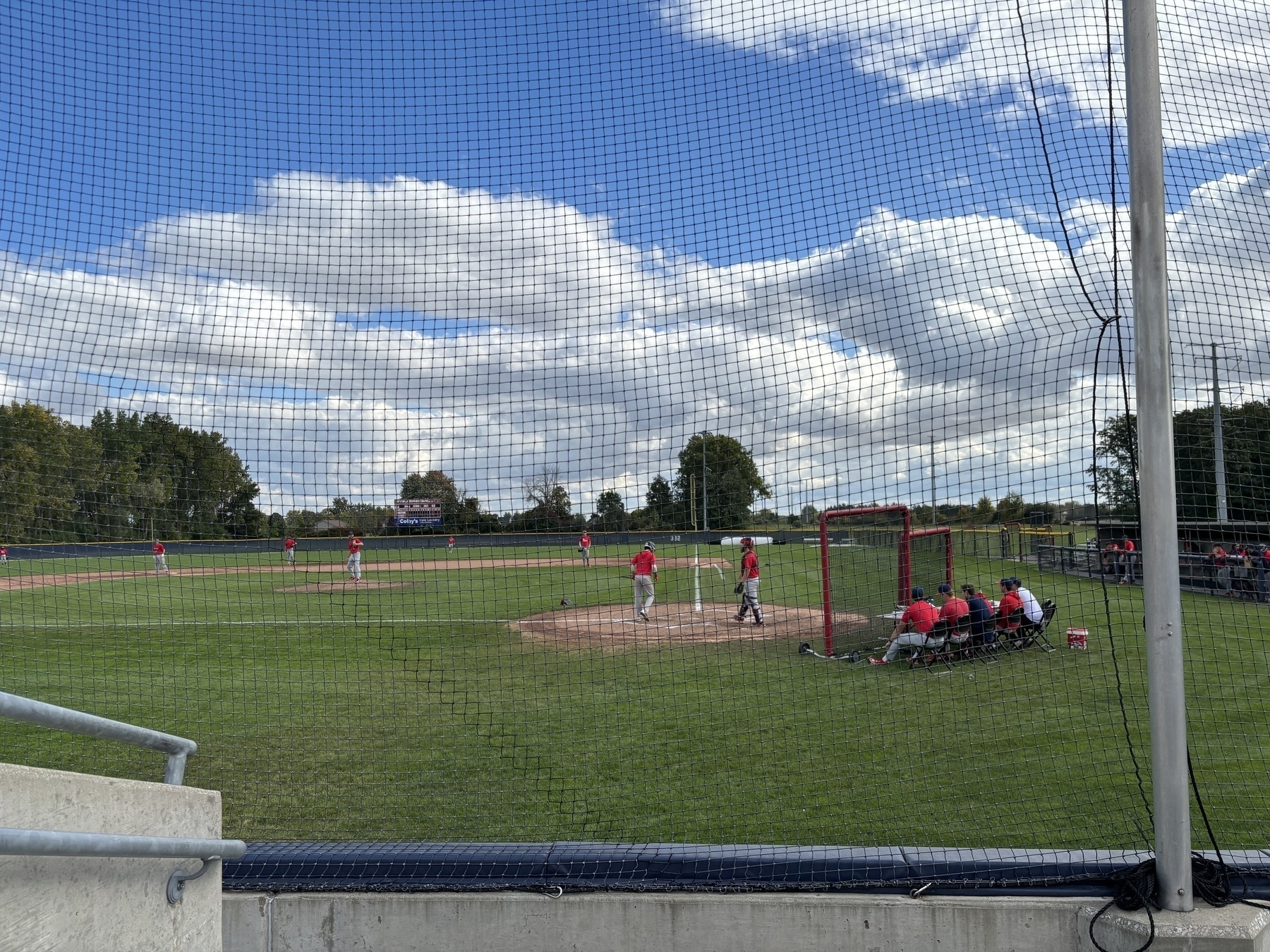
It’s been a really fun few days watching our boy play ball. The joy on his face as he plays the game he loves is like nothing else.

Learning new things is hard. I’m continuing to learn how to lift weights. I’m falling love with doing hard things.

When even your tobacco is orthodox…

😂😂🤷‍♂️

A perfect iced coffee at my favorite coffee shop in Ypsilanti, Cafe Liv!

Reading and enjoying a nice smoke on my patio while overlooking a freshly mown lawn. #lifeisgood

A ball field on a beautiful night is one of my happy places.