
Again the LORD spoke to Ahaz, “Ask the LORD your God for a sign, whether in the deepest depths or in the highest heights.”
But Ahaz said, “I will not ask; I will not put the LORD to the test.”
Then Isaiah said, “Hear now, you house of David! Is it not enough to try the patience of humans? Will you try the patience of my God also? Therefore the Lord himself will give you a sign: The virgin will conceive and give birth to a son, and will call him Immanuel. He will be eating curds and honey when he knows enough to reject the wrong and choose the right, for before the boy knows enough to reject the wrong and choose the right, the land of the two kings you dread will be laid waste.”
— Isaiah 7:10–16, NIV
Sometimes these readings are strange. Sometimes readings from the Revised Common Lectionary are interesting precisely because they force us to read the broader context of famous lines we often take out of context.
This is one of those readings.
Isaiah 7 is a fascinating chapter. Ahaz is the grandson of Uzziah (the king who died in the year Isaiah was called as a prophet). During Ahaz’s reign in Judah, two other kings are laying siege to the city. Both the people and the king are afraid. At the beginning of chapter 7, God tells Isaiah what to say to Ahaz in order to encourage him in the face of that fear.
Then we arrive at this passage and an unusual command from God: “Ask for a sign.”
Could you imagine?
God commands Ahaz to ask for a sign. In grace, God offers Ahaz this kindness. It is as if God is saying, “I know you’re scared. I get it. Those two armies are no joke. I want you to know that I have you. I will protect you. You don’t need to be afraid. Ask for a sign, anything. I will prove that I will take care of you.”
Ahaz, in what appears to be a form of false piety, replies, “No thanks. I will not put the LORD to the test.”
Isaiah is exasperated. He has heard enough. I have to imagine he has been hearing plenty of, “Where is your God now, Isaiah? Why isn’t God showing up to protect us?” So God compassionately and graciously offers to provide a sign “in the deepest depths or the highest heights,” and Ahaz responds with a dismissive, “No.”
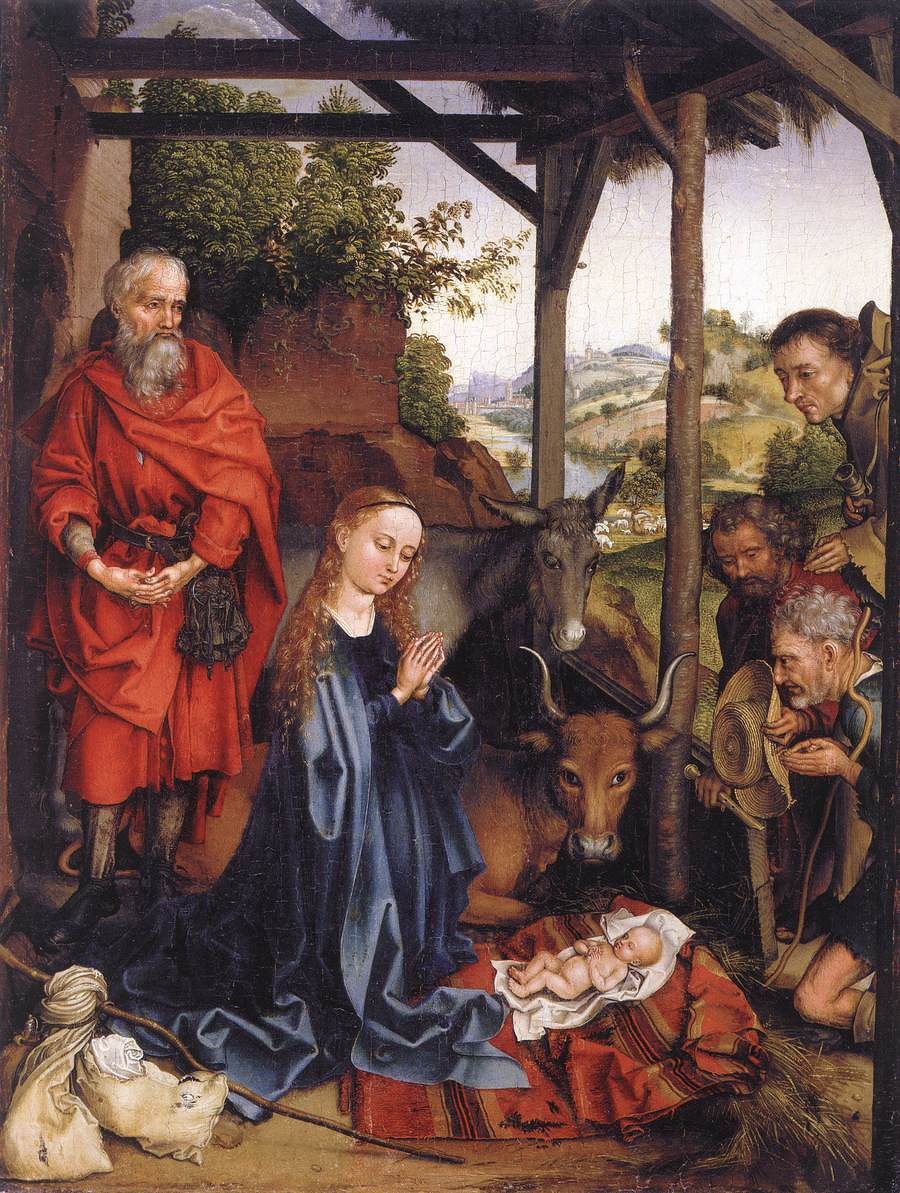
As a result, we receive the prophecy about the “virgin” (some manuscripts read young woman) conceiving and bearing a son who will be called Immanuel, God with us. The early church embraced this as a prophecy about Jesus. The early Judean followers of Christ searched the Scriptures (what modern Christians call the Old Testament) for signs and patterns that pointed to him. They developed a hermeneutic shaped by reading Israel’s Scriptures through the lens of the resurrected Christ.
What strikes me, however, is not the prophecy itself.
What strikes me is how unimpressed God is with false piety.
God does not desire a performative or artificial faith. God desires a real faith, even a faith that needs signs. Even a faith that struggles. Even a faith that wavers.
This, I think, is at the heart of what it means to proclaim Immanuel, God with us. Too often we think of this merely in terms of proximity. But it is more than that. God is with us in our doubt and in our struggle to believe. God is with us in our fear, our worry, and our anxiety. In the midst of it all, God deals with us in compassionate grace.
The question I wrestle with is this: Will I receive it?
Will I receive the sign that is offered, or will I reject God’s compassionate grace for the sake of a false piety?