Today is Super Bowl Sunday—a day synonymous with gatherings, snacks, and “sportsball.” Whether you’re there for the game or just the commercials, it’s one of those rare nights where everyone chills out and has a good time.
But in the first century, parties were a different story. They weren’t “democratic” like ours today; they were highly structured, intentional, and governed by strict social rules. This context makes the story of Jesus at a dinner party in Luke 14:1-14 all the more shocking.
We are picking up right where we left off in Revelation chapter 2. Last time, we covered the first three churches: Ephesus, Smyrna, and Pergamum. Today, we turn our attention to the final four.
In light of recent events in Minnesota and elsewhere regarding the work of Immigration and Customs Enforcement (ICE), I have seen many people cite Romans 13:1–7. It is often used as a “trump card” to end any argument. Too often, I think those citing the passage haven’t thought deeply about it or considered its original context. So, I revisited the text to consider again what Paul is actually arguing in the opening verses of chapter 13 in his magisterial letter to the Romans.
There is a famous story about a little boy walking along a beach scattered with starfish that have washed ashore. As he walks, he bends down, picks up a starfish, and throws it back into the ocean. Over and over again, he does the same thing.
A grizzled old man approaches him and says, “You know you’re making no difference, right? There are far too many starfish. You can’t possibly save them all. What does it matter?”
The boy bends down, picks up another starfish, and replies, “It matters to this one.” And he throws it back into the sea.
It’s a story most of us have heard before, but it remains a powerful reminder of how easily we fall into all-or-nothing thinking. If we can’t fix everything, why do anything at all? If we can’t make a big dent, why bother with the small effort?
Absolutely true. I know I’ve hit on a Kingdom message when people who are on the political right and people on the political begin a sentence with, “Pastor, you know…”
Dan Rose
It is remarkable to be able to come to a place like this to rest. I am beyond grateful for this time.
Dan Rose
When little bro flies in on the same plane you’re about to leave on…
Matthew chapter 5 opens what we often call the Sermon on the Mount. If you’ve ever read this section in a red-letter Bible, you know the feeling: suddenly the page looks packed, your eyes start swimming, and it can feel a little overwhelming.
This morning we’re focusing our attention on the opening 11 verses—the Beatitudes—as we continue our Epiphany series, God’s Kingdom Come. Each week we pray the Lord’s Prayer, asking:
“Your kingdom come, your will be done, on earth as it is in heaven.”
During this season we’re wrestling with a simple but challenging question: What are we actually praying for when we pray for God’s kingdom to come?
The Tigers hosted their faith night tonight at the Priority Club at Comerica Park. It was really interesting hearing stories from Lance Parrish and Frank Tanana.
After being in the Priority Club, I can see why the seats behind home plate are always empty. The space is ridiculously cool.
What if the cracking of your faith isn’t a failure—but an invitation?
Many of us were given a version of faith that worked right up until life applied pressure. Built on certainty, rules, and platitudes, it held together for a while. But grief, doubt, disappointment, and silence from God have a way of exposing how brittle that kind of faith really is.
In this episode of The Pastor Next Door, we explore the difference between brittle faith and enduring faith—and why the breaking apart of faith may actually be the beginning of something deeper and more honest.
In this episode, we explore:
Why faith rooted in agreement collapses under real life
How control masquerades as spirituality—and why relationship matters more
Why doubt and lament are not threats to faith, but signs of it
What it means to trust God without certainty
How Scripture (especially the Psalms) gives us permission to speak honestly
Why faith is not something we perform for God, but practice with God
Drawing from Scripture, personal story, and the words of a desperate father who prayed, “I believe; help my unbelief,” this episode makes space for wrestling, grief, and unfinished faith—without shame.
If your faith feels fragile right now, you’re not behind.
You might actually be paying attention.
This episode also sets the stage for what’s coming next on the podcast:
Season 1: Personal spiritual fitness — slow, ordinary practices rooted in grace
Season 2: Faith deconstruction and reconstruction
Season 3: Community, connection, and belonging
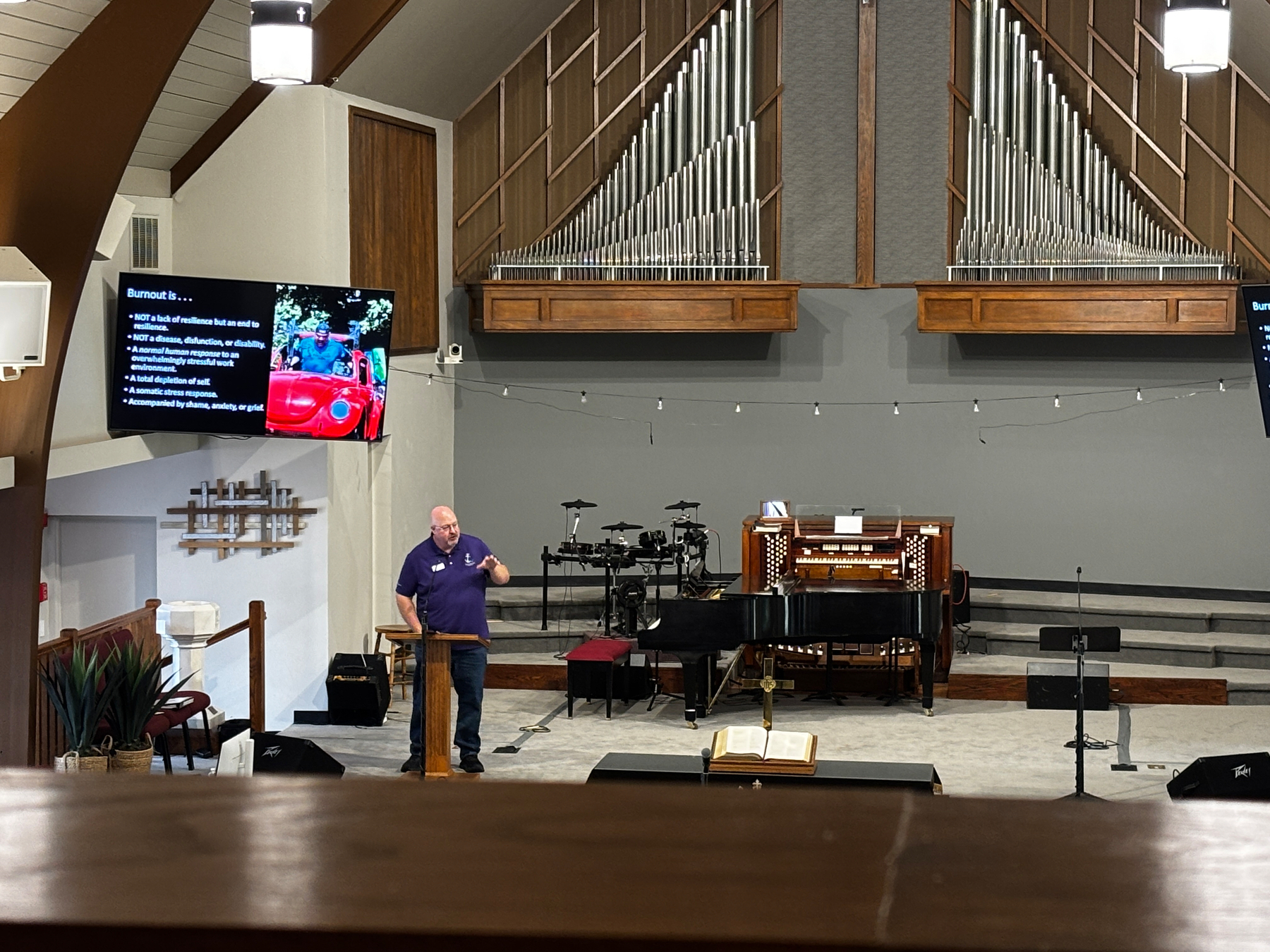
Season 4: Leadership without burnout
No quick fixes.
No pressure to arrive.
Just an honest, grace-filled space to keep going.
Take your time.
Grace and peace, friends. May you love well.
In this session of Beyond Sunday School, we turn our attention to Revelation chapters 2 and 3 and begin working our way through the letters to the seven churches. We won’t get through all seven at once, but we’ll start with the first three: Ephesus, Smyrna, and Pergamum.
Before looking at each church individually, there are a couple of important reminders that shape how we read these chapters.
If you would like to listen to the whole unabridged version it is available here: The Kingdom Received
It was the middle of July in 2001. A couple of weeks earlier, Amy and I had been sitting in her doctor’s office for a routine appointment—ultrasound, measurements, all the usual things. At the end of the visit, the doctor looked at us and said, “I think it’s time for this baby to be born.” The baby was getting a little too big and needed to make an appearance.
This was our first child. We didn’t know the gender—we were doing the surprise thing—and suddenly we were nervous. But the doctor reassured us: “Don’t worry. We’ll schedule a time. You come in on this day, at this time, and we’ll get things started.”